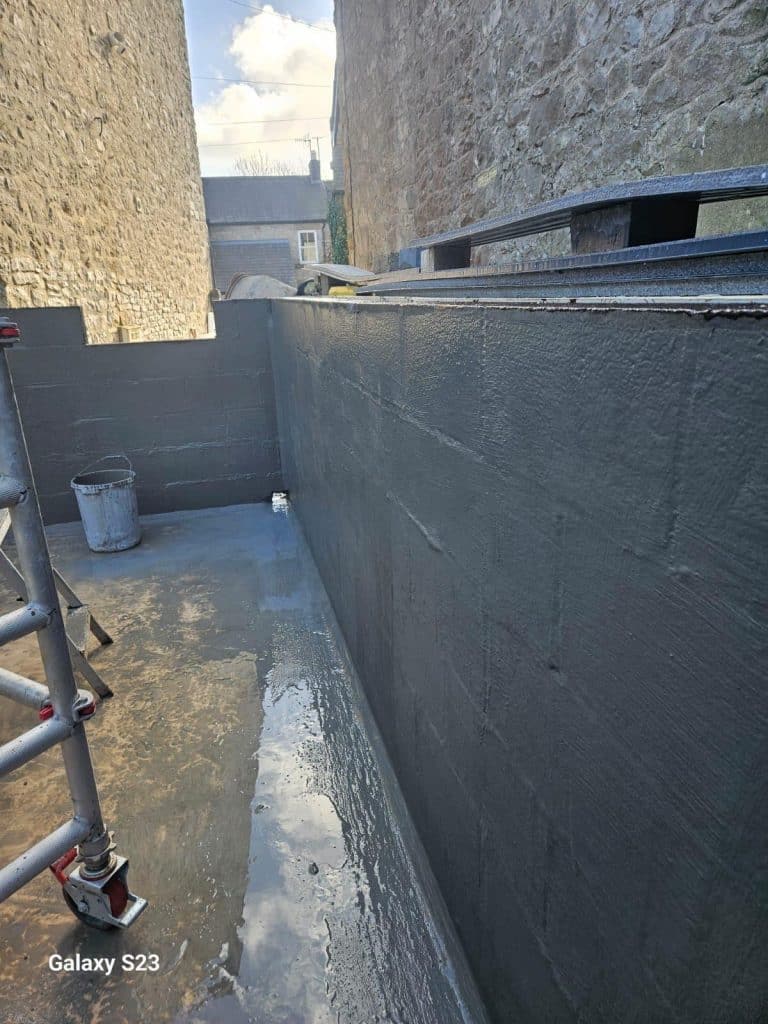



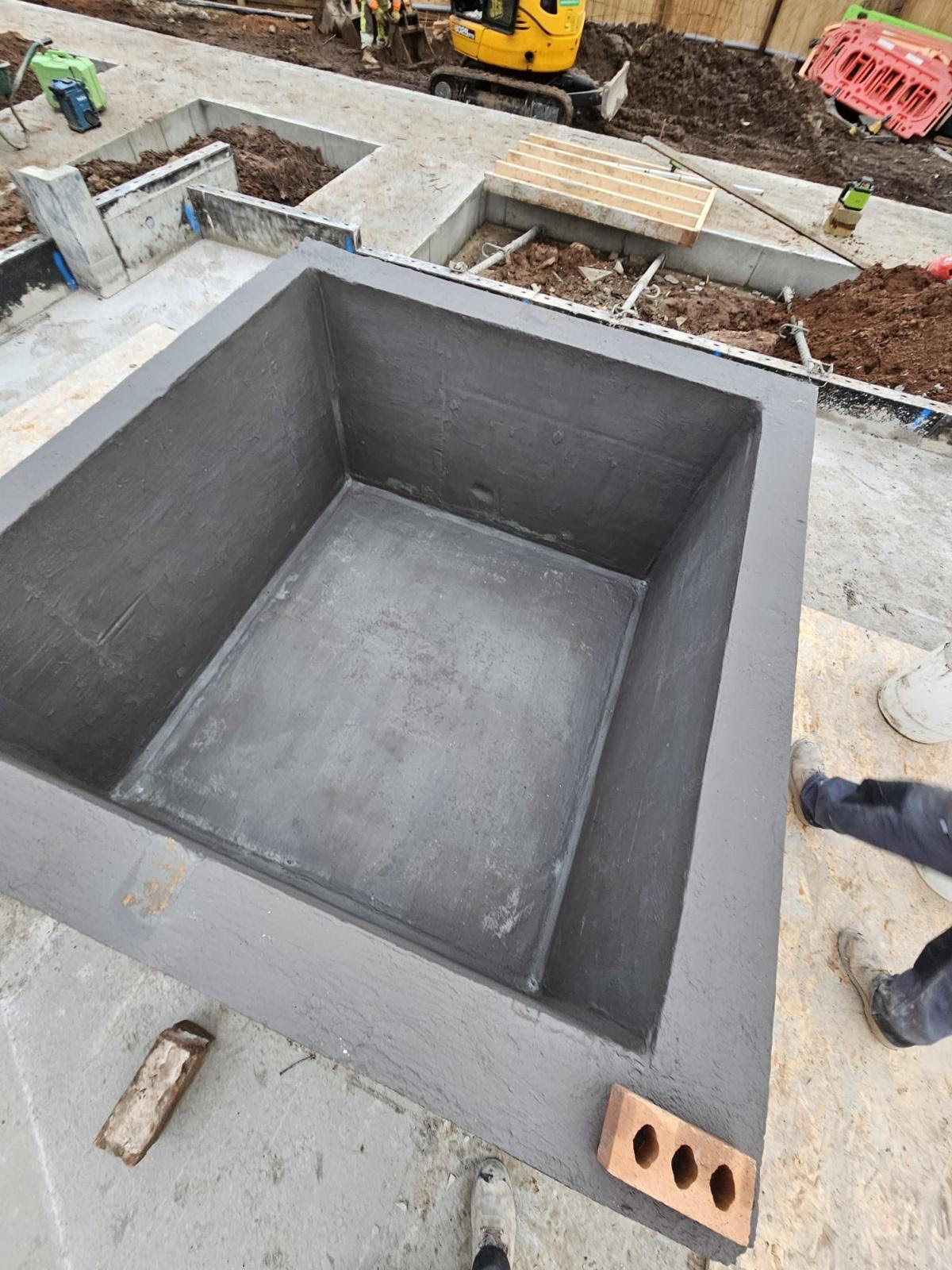
The video shows our technician, at the final stage of the waterproofing process, applying rubber-like Koster NB 4000 to bridge any micro cracks in the lift pit walls.
We were asked by a building contractor to assist with the waterproofing element of new build lift pit in a residential care home in York.
In accordance with BS 8102:2022, (Code of practice for protection of below ground structures against water from the ground) our design implemented a mixed waterproofing approach (Type A Barrier Protection combining surface mineral slurries and flexible hybrid coatings) to ensure a dry environment suitable for the intended use.
Scope of Works and Installation Sequence
Using Köster NB 1 Grey in conjunction with Köster NB 4000 creates a highly resilient, hybrid Type A waterproofing system ideal for new build lift pits. This combination effectively addresses the two biggest threats to lift pits: extreme hydrostatic pressure at the building’s lowest point and structural micro-vibrations from elevator movement.
Application Strategy for New Build Lift Pits
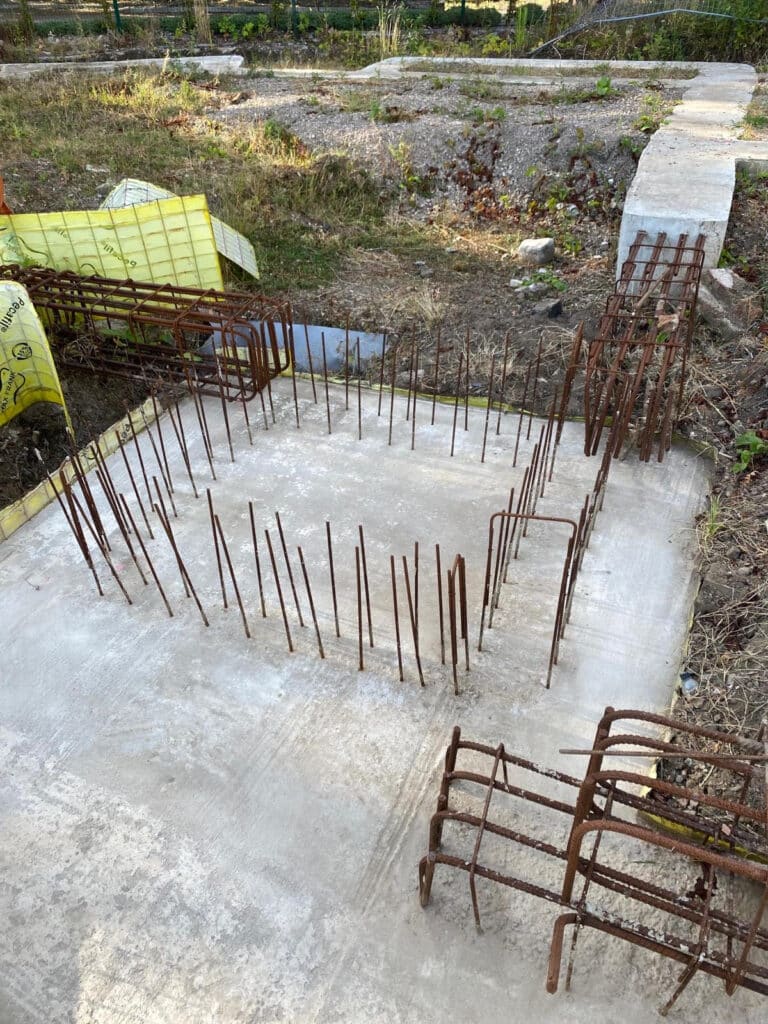
- Surface Preparation: The newly poured reinforced concrete was cleaned, sound, and mechanically prepared (e.g., bush hammered or ground) to remove surface laitance and open the pore structure. It is highly recommended to apply an anti-lime primer, such as Köster Polysil TG 500, to neutralize free lime. This prevents lime leaching, which can expand and debond internal coatings in newly poured concrete.
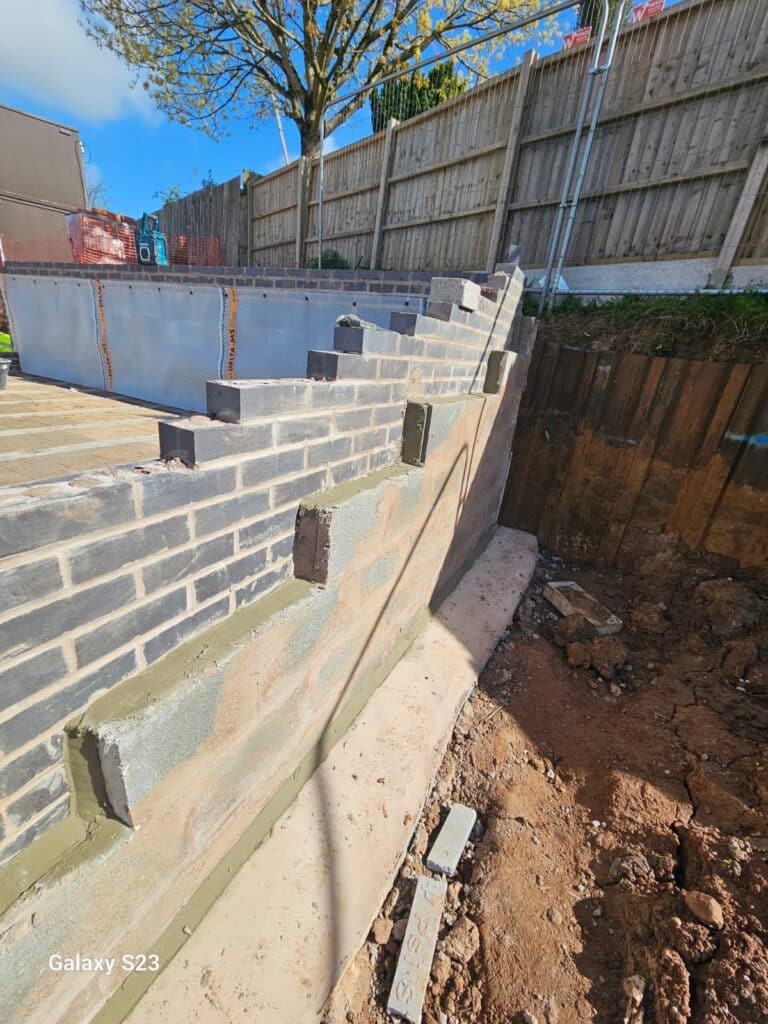
- Fillet: The 90-degree wall-floor junction is the most vulnerable zone for water ingress due to the cold joint. We installed a fillet using Köster Repair Mortar Plus along this junction. This eliminates the sharp internal corner, reducing stress concentration on the waterproofing membranes.
- Primary Crystalline Seal (NB 1 Grey) and Flexible Bridging Layer (Koster NB 4000) We applied a combination of the above products. The active crystallizing agents migrate deep into the concrete capillaries, forming an inseparable, rigid plug that resists extreme negative-side hydrostatic pressure (up to 130m of water head). Because lift shafts endure continuous dynamic stress and vibration from the elevator cab, the highly elastic, rubber-like NB 4000 acts as a shock absorber. It will bridge any structural micro-cracks may develop in the rigid concrete or NB 1 slurry over the building’s lifespan
- Vapour Barrier: Finally, we applied Köster Deuxan 2C over the slab. Koster Deuxan 2C is an effective vapour barrier to stop any corrosion in the lift mechanism fixings.
Mechanism: These products contain active crystallising and capillary-plugging agents that penetrate mineral substrates, resisting hydrostatic water pressure up to 13 bar.